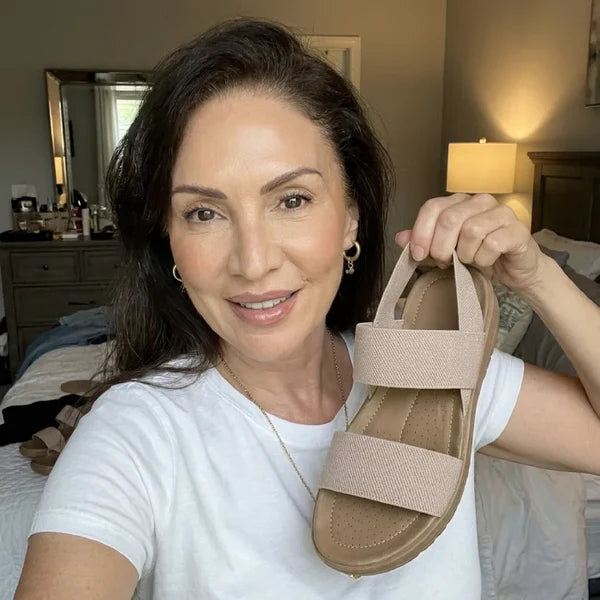
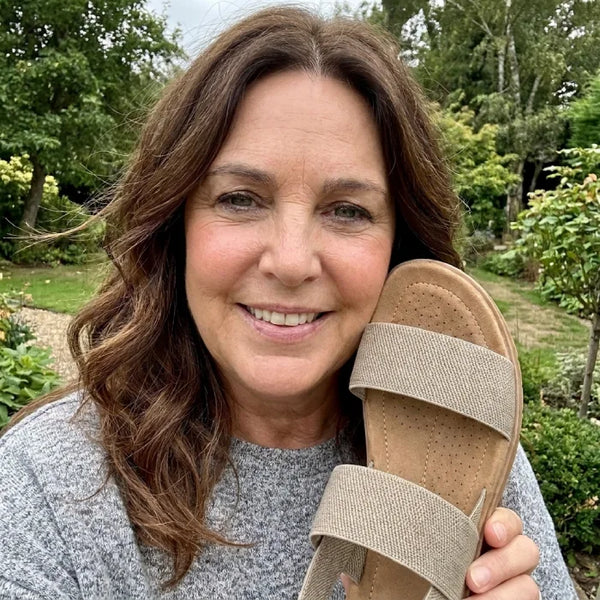
I have wide feet that swell in the heat. I've returned more 'comfort' sandals than I can count. These are the FIRST pair that didn't cut into me by 4 PM. The elastic actually moves with my feet instead of fighting them. I have them in two colors now
0 items in cart
FAILED COMFORT SHOES
You bought the cushion. You tried the wide size. You gave them time to "break in."
And somehow, another pair you were sure would finally feel right is sitting unworn. Maybe the problem isn't that you haven't found the softest shoe yet.
If you have difficult-to-fit or sensitive feet, you probably know the routine. A shoe gets called "supportive," "cushioned," "wide," or "made for comfort." You try it on. It feels promising. Then a few hours, days or weeks later, the same problems start showing up again.
The shoe was not necessarily badly made. It may simply have solved the wrong part of the problem. That is what these six reasons are about.
Walk through almost any shoe aisle and "comfort" usually gets reduced to one or two things.
More foam. A softer footbed. A padded lining. Maybe a "wide" label on the box.
Those things can absolutely contribute to comfort. But they are not the same thing as a shoe fitting your foot well.
Think about a sofa. It can have the softest cushions in the world. If the seat is too narrow for you, you are still not going to sit comfortably for long.
Shoes work the same way. Softness can help. But if the rest of the fit is fighting your foot, softness alone has a hard job making up for it.
Which explains why one of the most common comfort fixes can still disappoint.
Comfort is not one feature. It is the result of how the whole shoe works together.
There is a reason thick cushioning feels so convincing when you first try a shoe on.
It feels good immediately. You step down. It feels soft. Your brain says: "This must be comfortable."
But the footbed is only underneath your foot. It cannot automatically change what is happening around it.
A heavily cushioned shoe can still crowd the toes, press across the forefoot, feel restrictive around the upper, move too much at the heel, or lock you into a fit that simply does not suit your foot.
That does not make cushioning bad. It just means softness and fit are two different things.
And that same problem shows up when the obvious solution is simply buying wider.
A soft shoe can still be the wrong shape for your foot.
When a shoe feels too tight, the logical next step is: "Fine. I'll buy the wide version."
Sometimes that works. Sometimes it only moves the problem.
You may get extra room through part of the shoe, while another area still feels crowded. Or you size up for more space in front, and now the heel feels loose.
That is because your foot is not just one width measurement. Fit is three-dimensional. Different feet need room in different places.
So "wider everywhere" is not always the same thing as "more room where my foot actually needs it."
And even if the shape is close, a fixed shoe still has another limitation.
Old solution: make the whole shoe bigger.
Better question: where does my foot actually need more room?
Think about how many shoes are essentially: put them on and hope the fit is right.
The upper has one shape. The straps sit in one position. The amount of room is fixed.
If one area feels slightly too snug, your options are limited. You either live with it, size up, or stop wearing the shoe.
That is why adjustability can matter so much for people who repeatedly struggle with fit.
The goal is not to have a shoe hanging loosely from your foot. It is to have more control over where the shoe feels snug and where it gives you room.
But there is another trap too: assuming a shoe should hurt before it gets comfortable.
One fixed fit is not always ideal for one very individual foot.
We have all heard it. "They'll soften up." "Give them a week." "They just need breaking in."
And yes, some materials naturally become more flexible with wear.
But there is a difference between a new shoe gradually becoming familiar and a shoe repeatedly creating pressure because the fit is wrong.
If your toes are crowded, a strap sits exactly where you do not want it, or the shape simply does not match your foot, waiting longer does not automatically change the basic geometry of the shoe.
The better starting point is a fit that already gives your foot enough room and feels reasonably comfortable from the beginning.
So if cushion, width and break-in are not enough on their own, what actually should you be looking for?
Break-in can change a material. It does not magically redesign the shoe.
This is the shift that changes the way you shop.
Stop asking: "Which one has the most cushioning?" Stop asking only: "Which one comes in wide?" Stop assuming: "Maybe I just need to break it in."
Instead ask: Does this shoe give my foot enough room? Can I control the fit? Does it feel comfortable underneath? Does it stay secure without squeezing? Does the shape of the shoe work with the shape of my foot?
That is a more complete definition of comfort.
Because the goal is not to find the shoe with the longest list of "comfort features." The goal is to find the shoe where those features actually work together.
So what should you actually look for before buying another pair that ends up in the closet?
You do not need every shoe to have twenty features. But these five questions are a much better starting point than simply pressing your thumb into the footbed.
If a shoe can answer those questions well, you are looking at something very different from another "soft shoe." You are looking at a more complete fit.

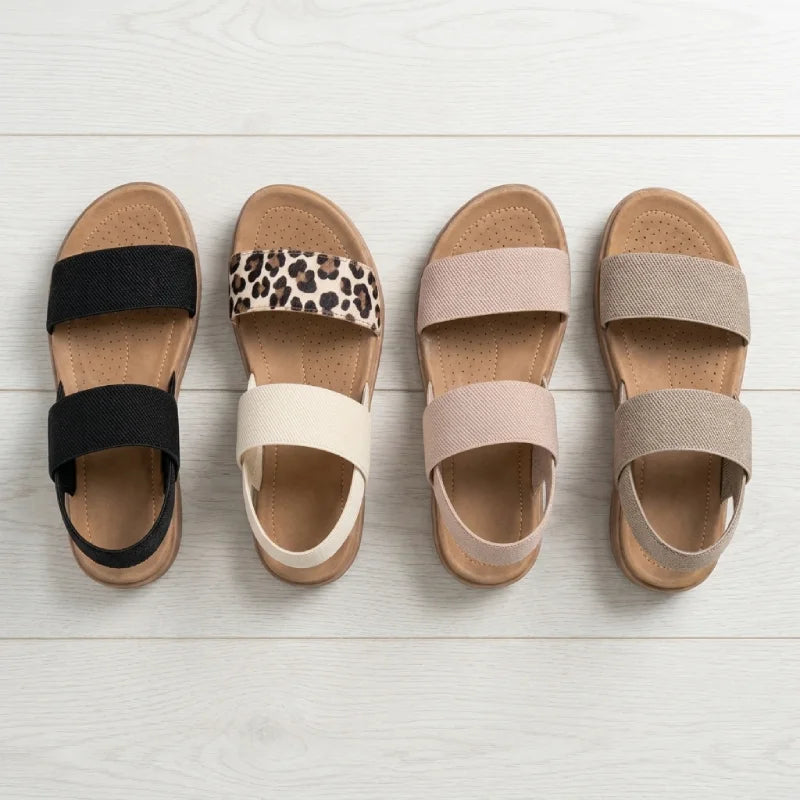
OrthivoFeet's Stretch-Strap Comfort Sandals bring together several of the fit qualities we just talked about.
Not because one sandal can magically be perfect for every foot. No shoe can.
But the difference is in how the product approaches comfort. Instead of relying on one feature and calling the job done, the design includes verified elements intended to address different parts of the fit experience.
Here is what that means in practice.

IF FIXED FIT HAS FAILED YOU
The listicle established that one fixed fit gives the wearer limited control.
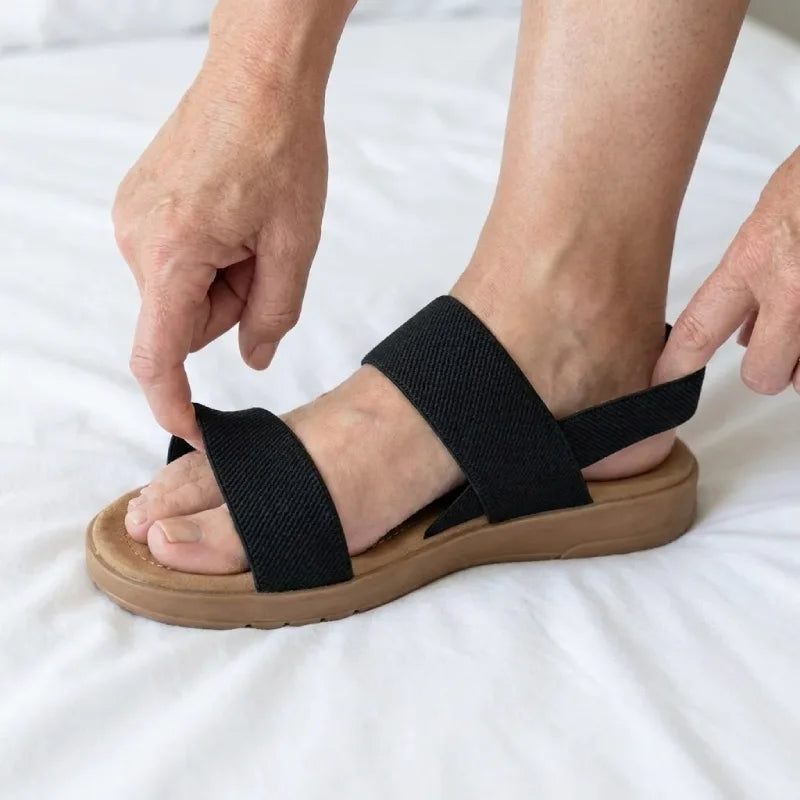
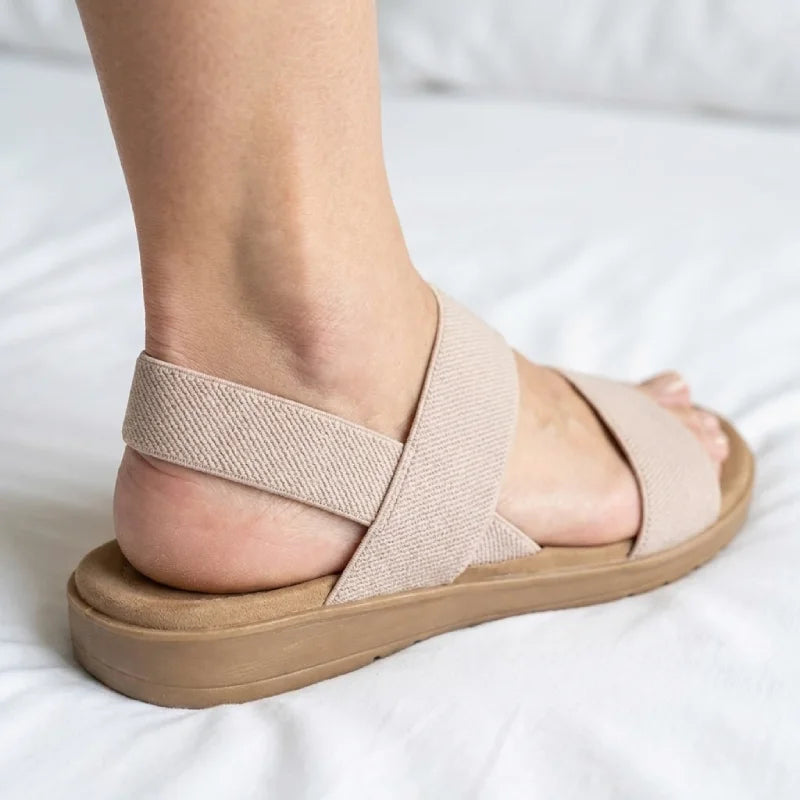
OrthivoFeet's actual mechanism: the crossover straps are made from stretch elastic, so they flex and give with your foot instead of holding one fixed shape. That means a bit more give exactly where your foot needs it.

IF "WIDE" STILL HASN'T FELT RIGHT
The page established that a wide label does not automatically mean the available room is in the right place.
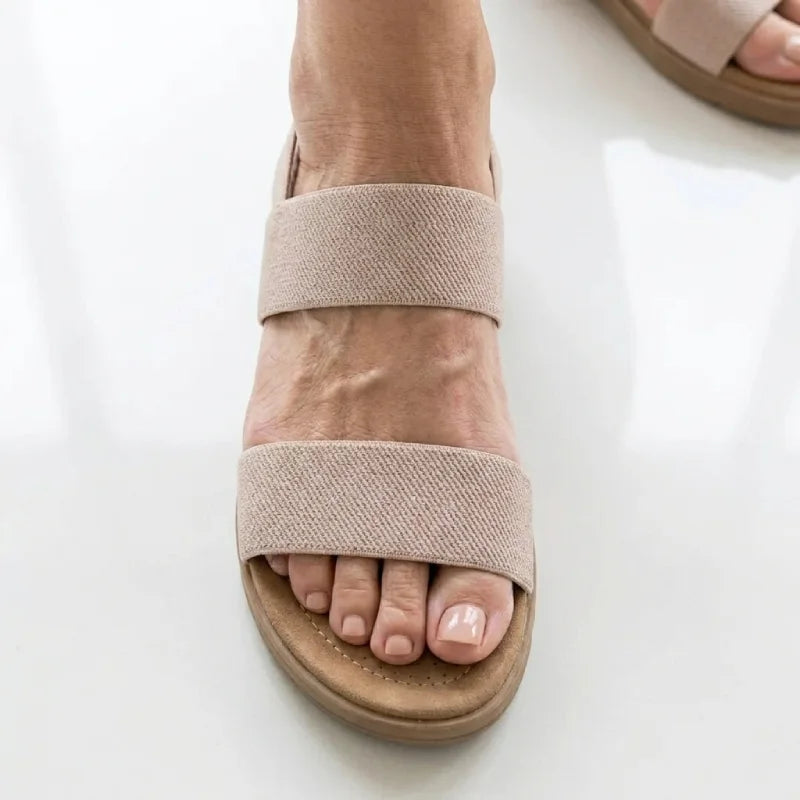
OrthivoFeet's toe box is built wide and open, giving your toes room to spread out and rest naturally instead of forcing them into a narrow shape.

IF YOU STILL WANT COMFORT UNDERFOOT
Cushioning was never the enemy. The point is simply that it should work together with the rest of the fit.
The footbed has a textured surface built to hold its grip underfoot, including when your feet get damp during the day.

IF ROOM USUALLY MEANS "TOO LOOSE"
The page established that customers do not simply want the biggest shoe possible. They want room without losing security.
The straps cross over the top of the foot, which helps keep the heel positioned even as the front of the strap gives a bit for room.
If cushion, sizing up and "breaking them in" have already failed you, it may make more sense to look at the complete fit instead.
The most useful reviews here are not "they're cute" or "I like the color." They are the ones that tell us what changed about the actual fit.

I have wide feet that swell in the heat. I've returned more 'comfort' sandals than I can count. These are the FIRST pair that didn't cut into me by 4 PM. The elastic actually moves with my feet instead of fighting them. I have them in two colors now
I'm a teacher, on my feet 8+ hours a day. In my old Skechers I'd be hobbling by Friday. Wore these to a wedding last weekend: walked, danced, stood for 6 hours. Zero pain. They've become my everyday pair.

Took these on a 12-day trip: walked over 50 miles on cobblestones, beaches, and city streets. Zero blisters, zero break-in, zero regrets. Came out of the suitcase looking exactly like the day I packed them. Buying my mom a pair next
No shoe is going to fit every person perfectly. And after wasting money on footwear that looked promising but ended up unused, being skeptical is reasonable. That is why the practical buying terms matter too.
Try it risk-free for 30 days: room where you need it, a secure fit, and straps that move with your foot.
If you have already tried more cushion, a wider size, softer materials, or simply waiting for a shoe to "break in," the answer may not be another version of the same solution. A better place to start is the whole fit: room where your foot needs it, comfort underneath, more control over how the shoe fits, and enough security that extra room does not turn into a loose shoe.