🌸Summer Sale
00DAYS
00HRS
00MIN
00SEC
OrthivoFeet · Foot Comfort Guide

FIRST STEPS / AFTER SITTING

6 Reasons Your First Few Steps After Sitting Can Feel So Different

OrthivoFeet TeamFoot Comfort Guide

Sitting can feel completely fine. Then you stand up, and suddenly your feet are the first thing you notice.

If those first few steps are consistently the hardest part of getting moving again, the answer may not simply be finding a softer shoe.

That sit-to-stand moment is easy to dismiss until you experience it over and over again.

You finish lunch. You get up from the couch. You stand after a long drive. And for those first few steps, your feet suddenly demand your attention.

So why can that transition feel so different? That is what this listicle explains.

SITTING
Feels fine.
STANDING
Here it comes.
FIRST FEW STEPS
Most noticeable.
MOVING AGAIN
Different once you get going.

01You Notice Your Feet More the Moment They Have to Work Again

While you are sitting, your feet are not doing the same job they do when you are standing and walking.

Then you stand up.

Almost instantly, your feet go from resting to supporting you again.

That change alone can make sensations that were easy to ignore while seated much more noticeable.

It is why someone can sit through a meal feeling perfectly comfortable, then stand up and immediately think: "Yep. There it is."

The first few steps become a kind of reset point. They are often the first moment you find out how your feet actually feel when movement begins again.

And if that transition already makes your feet more noticeable, even small problems with your shoes can suddenly matter a lot more.

Rest can hide the problem. Standing makes you notice it.

02Small Pressure Points Become Very Obvious on Those First Steps

Think about the little things you can tolerate once you are already moving.

  • A strap that feels slightly snug.
  • A toe that feels a little crowded.
  • A firm edge near the side of your foot.
  • A shoe that feels just a bit too restrictive.

When you have been walking for a while, you may barely think about them.

But the moment you stand up after sitting, those same pressure points can suddenly become much harder to ignore.

That does not mean the shoe caused whatever discomfort you are experiencing. It does mean one thing: if your feet are already sensitive during those first few steps, your footwear should not be adding unnecessary pressure on top of it.

That is also why simply looking for the softest shoe on the shelf can miss part of the problem.

The goal is not to "fix" your feet with a shoe. The goal is to stop making a sensitive moment harder than it needs to be.

03More Cushion Is Not Automatically a More Forgiving First Step

When your feet bother you, the obvious reaction is: "I need something softer."

And cushioning can absolutely be part of a comfortable shoe.

But softness underneath your foot is only one part of what you feel when you take a step.

Imagine standing in a heavily cushioned shoe that still squeezes your toes, presses across the wrong part of your foot, feels too rigid around the upper, or gives you no control over how snug the fit is.

The footbed might feel soft. The shoe can still feel restrictive. That is the distinction.

First-step comfort is not just more foam. It can also depend on:

  • Room
  • Fit
  • Pressure
  • Adjustability
  • Underfoot feel

The question should not simply be: "How soft is this shoe?" A better question is: "How forgiving does the entire shoe feel when my foot starts moving again?"

And one of the biggest parts of that is simply giving your foot enough room.

04Your Foot Needs Room to Move, Not Another Shape to Fight Against

A shoe has a shape. Your foot has a shape. Problems start when those two do not get along.

If the forefoot feels crowded, the toes are compressed or a fixed part of the shoe sits directly against a sensitive area, those first steps can become the exact moment you notice it.

That is why "comfort" is not only about what is underneath the foot. It is also about what is happening around it.

A more forgiving fit should give the foot enough room to sit naturally inside the shoe without creating unnecessary pressure where you already feel sensitive.

You should not have to force your foot into the shape of the shoe every time you stand up.

But room alone is not the complete answer either. You still need the shoe to feel secure.

A comfortable footbed inside a restrictive shoe is still a restrictive shoe.

05The Best Fit Gives You Room Without Making the Shoe Feel Loose

There is a frustrating trade-off many people run into.

Go too snug: the shoe can feel restrictive. Go too loose: your foot starts moving around inside it.

Neither feels especially good when you are taking those first few steps after sitting.

What you actually want is more precise than "tight" or "loose." You want room where your foot needs it and security where it doesn't.

That is where adjustability becomes useful. If a shoe lets you control how snug different areas feel, you are not stuck with one fixed fit all day. You have more ability to find the balance that feels right for your foot.

Which brings us to the biggest shift in how to think about footwear for those first few steps.

06Stop Looking for the "Softest" Shoe, Look for the Most Forgiving Overall Fit

If those first steps after sitting are when you notice your feet most, judging a shoe by one feature does not make much sense.

Not just: "How thick is the cushioning?"
Not just: "Is it labeled wide?"
Not just: "Does it feel soft when I press it with my thumb?"

The better question is: Does the entire fit work with my foot?

That means looking for a combination of enough room, a comfortable underfoot feel, less unnecessary pressure, a secure fit, and, where useful, the ability to adjust how the shoe fits.

That is a very different way of shopping. Instead of trying to find the shoe with the biggest comfort claim on the box, you are looking for footwear that feels less demanding on your feet. Especially during the exact moments when you notice them most.

So what does that actually look like in a sandal?

The old question: "Which shoe feels softest?"
The better question: "Which shoe gives my foot the most forgiving overall fit?"

What Should You Actually Look for If Those First Steps Are the Hardest?

Before looking at any specific product, there are four things worth paying attention to.

  • Room where your foot needs it: your toes and forefoot should have enough space without feeling unnecessarily crowded
  • A more forgiving fit: the upper should work with the shape of your foot rather than creating hard, restrictive pressure around it
  • Control over how snug it feels: adjustability can give you more control over the fit instead of locking your foot into one fixed setting
  • A comfortable underfoot experience: cushioning or other underfoot features still matter, they just need to be part of a complete fit

Put those four together and the buying decision becomes much clearer. You are not looking for a sandal that promises to "fix" your feet. You are looking for one that does not unnecessarily fight them.

That's Where OrthivoFeet Comes In

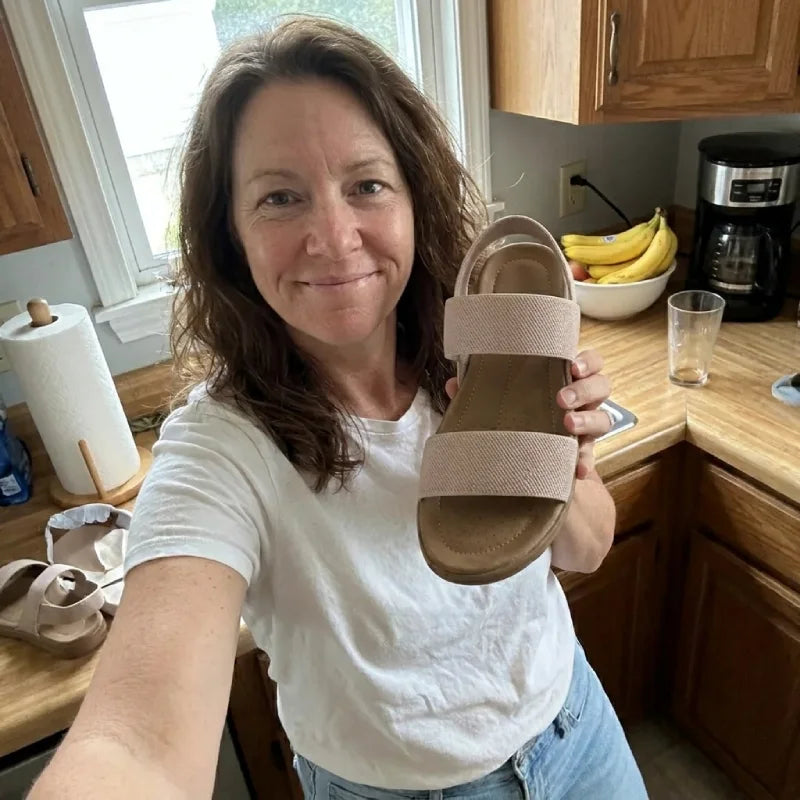
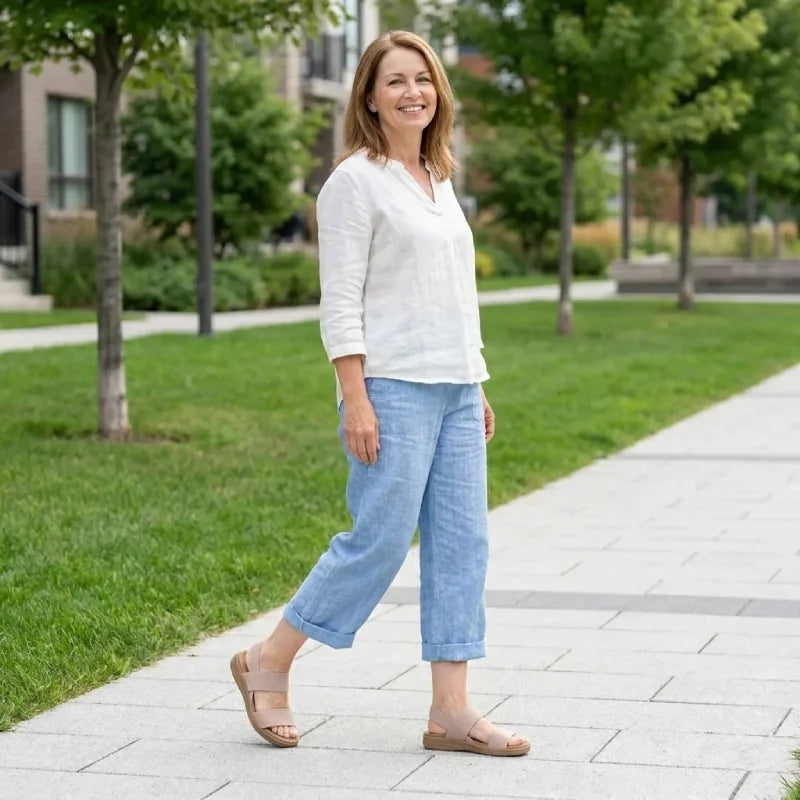
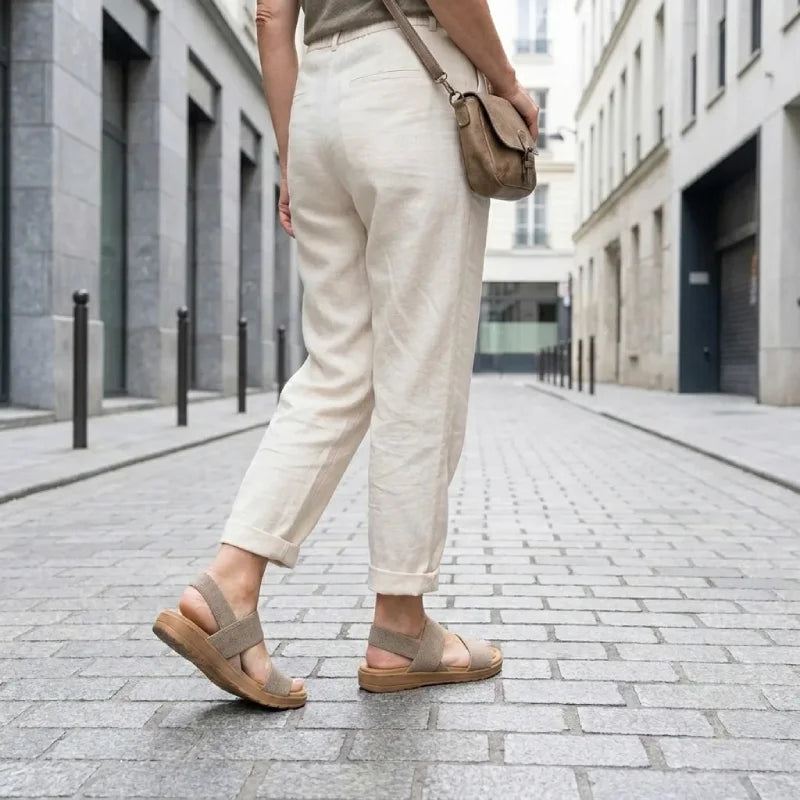
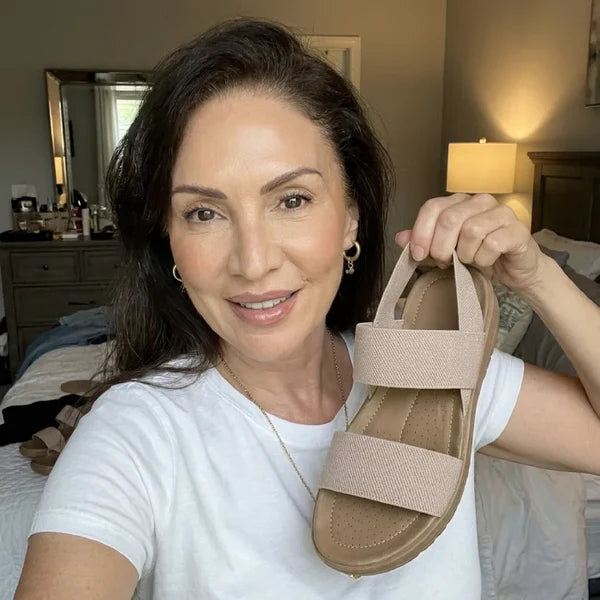
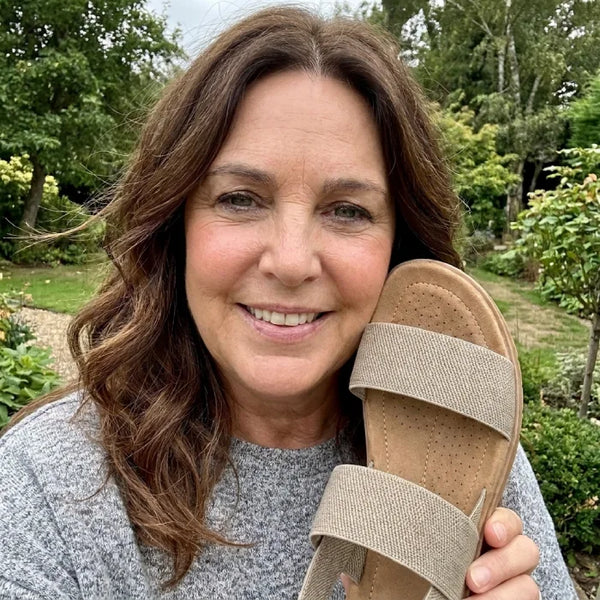
OrthivoFeet's Stretch-Strap Comfort Sandals are built around several of the exact fit qualities we just talked about.

Not because a sandal can magically solve the reason your feet feel uncomfortable after sitting. It cannot.

But the footwear you choose can determine whether your shoes add extra crowding, pressure or restriction to those first few steps. And that is where the details of the fit matter.

Here is how the actual OrthivoFeet design addresses those fit requirements.

IF YOU NEED MORE CONTROL OVER THE FIT

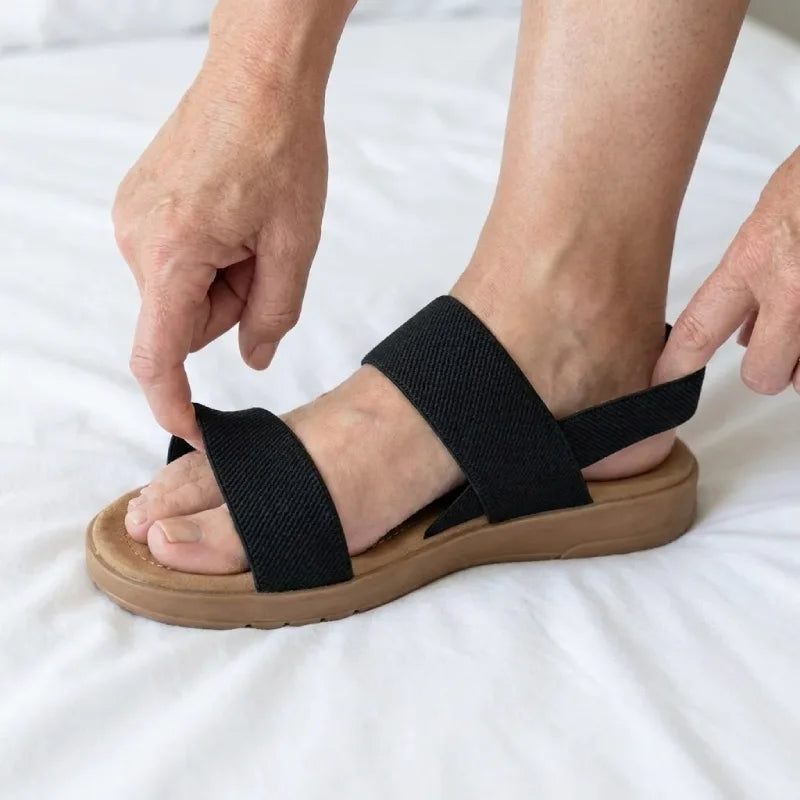
Stretchy Straps That Move With Your Foot

The listicle established that a completely fixed fit gives the wearer less control over how snug the shoe feels.

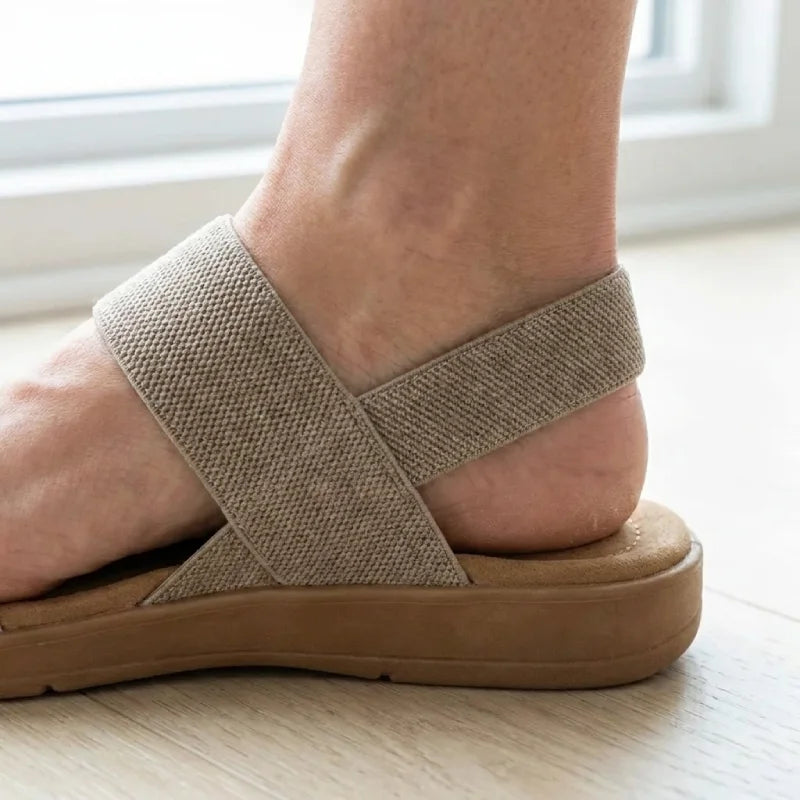
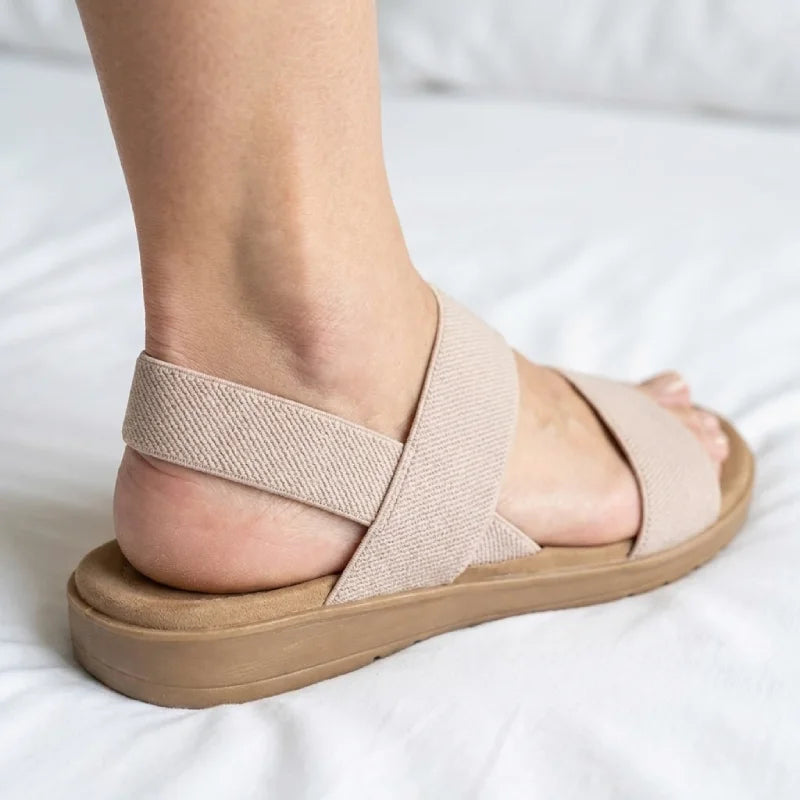
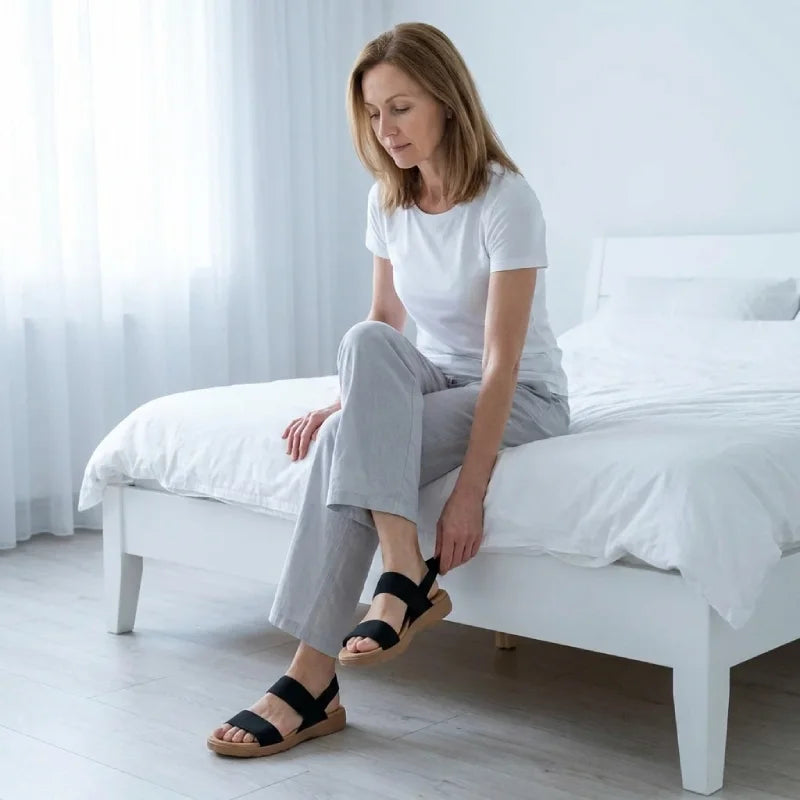
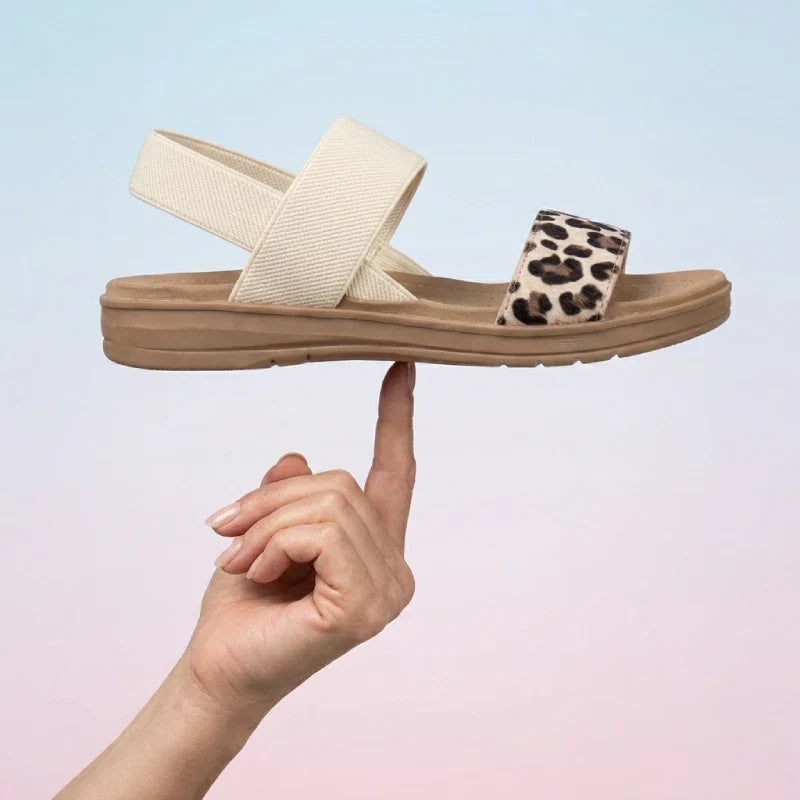
OrthivoFeet's actual response: the crossover straps are made from stretch elastic, so they flex and give with your foot instead of holding one fixed shape. That means a bit more give exactly where your foot needs it, rather than a fit that stays rigid no matter what.

IF YOUR FOREFOOT FEELS CROWDED

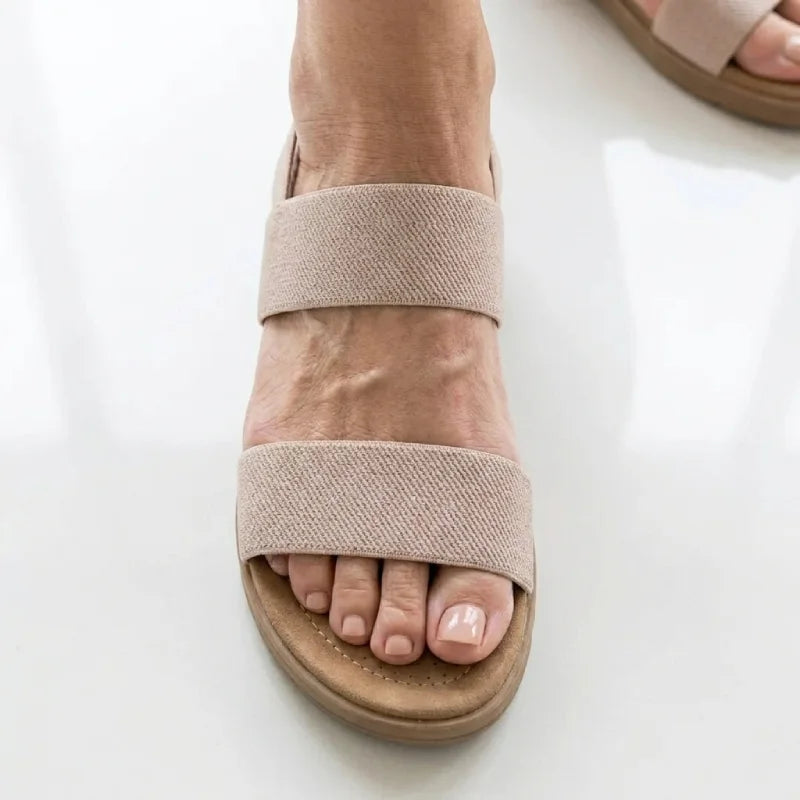
A Wide, Open Toe Box

The page established that underfoot softness does not help much if the rest of the shoe still feels restrictive.

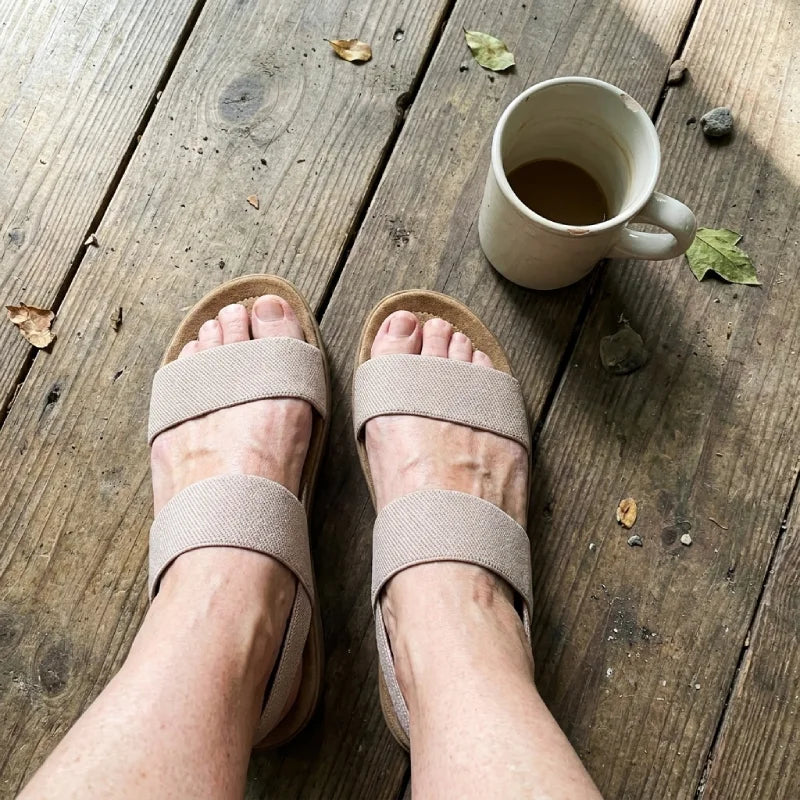
OrthivoFeet's toe box is built wide and open, giving your toes room to spread out and rest naturally instead of forcing them into a narrow shape.

IF UNDERFOOT FEEL MATTERS TO YOU

A Textured Footbed Built to Hold Its Grip

Cushioning is not the entire answer. But it can still be an important part of the experience.

The footbed has a textured surface built to hold its grip underfoot, including when your feet get damp during the day.

ROOM STILL HAS TO FEEL SECURE

A Crossover Strap Design That Keeps the Heel in Place

More room should not mean spending every step trying to keep the sandal attached to your foot.

The straps cross over the top of the foot, which helps keep the heel positioned even as the front of the strap gives a bit for room. Added room does not come at the cost of the sandal staying in place.

See the Fit for Yourself

If those first few steps are when you notice your feet most, it may be worth looking beyond "soft" and paying closer attention to the entire fit.

SEE THE ORTHIVOFEET SANDALS →

What Customers Notice About the Fit

A product description can tell you how a sandal is built. Customer experiences can tell you which details people actually notice once they start wearing it.

What People Notice Once They Start Wearing Them

Patricia K.
Patricia K.
Verified Customer
5.0

I have wide feet that swell in the heat. I've returned more 'comfort' sandals than I can count. These are the FIRST pair that didn't cut into me by 4 PM. The elastic actually moves with my feet instead of fighting them. I have them in two colors now

Deborah W.
Deborah W.
Verified Customer
5.0

Took these on a 12-day trip: walked over 50 miles on cobblestones, beaches, and city streets. Zero blisters, zero break-in, zero regrets. Came out of the suitcase looking exactly like the day I packed them. Buying my mom a pair next

What If the Fit Still Isn't Right for You?

Finding comfortable footwear is personal. What works for one foot may not feel right for another. That is why the practical buying details matter too.

  • Try it risk-free for 30 days. If the fit isn't right, return or exchange it within 30 days of delivery.
  • True to size, US 5–11.5 including half sizes. If you're between sizes, we recommend sizing up.
  • Free shipping on all orders.

BUY 1 GET 1 FREEON ORTHIVOFEET STRETCH-STRAP SANDALS

Try it risk-free for 30 days: room where you need it, a secure fit, and straps that move with your foot.

GRAB YOUR BOGO DEAL →
Forgiving Fit
Room where you need it, without losing a secure feel
30-Day Risk-Free
Try it risk-free for 30 days, return or exchange if needed

Your First Few Steps Shouldn't Have to Fight Your Shoes Too

If standing up after sitting is already when you notice your feet most, your footwear should not be adding unnecessary crowding, pressure or restriction to the moment. The answer may not simply be more cushioning. It may be a more forgiving overall fit: room where your foot needs it, comfort underneath, a secure feel, and more control over how the sandal fits.

SEE THE ORTHIVOFEET SANDALS →
Forgiving Fit
Room where you need it, without losing a secure feel
True to Size
US 5–11.5, half sizes included

Questions About the Fit?

Are these suitable for wider feet?

Yes. The stretch straps and wide toe box move with your foot rather than holding one fixed shape, which also makes them accommodating for wider feet.

How adjustable is the fit?

The crossover straps are made from stretch elastic, so they move and adjust with your foot instead of holding one fixed shape.

What kind of cushioning or footbed do they use?

The sandals use a textured footbed built to hold its grip underfoot, including when your feet get damp.

How should I choose my size?

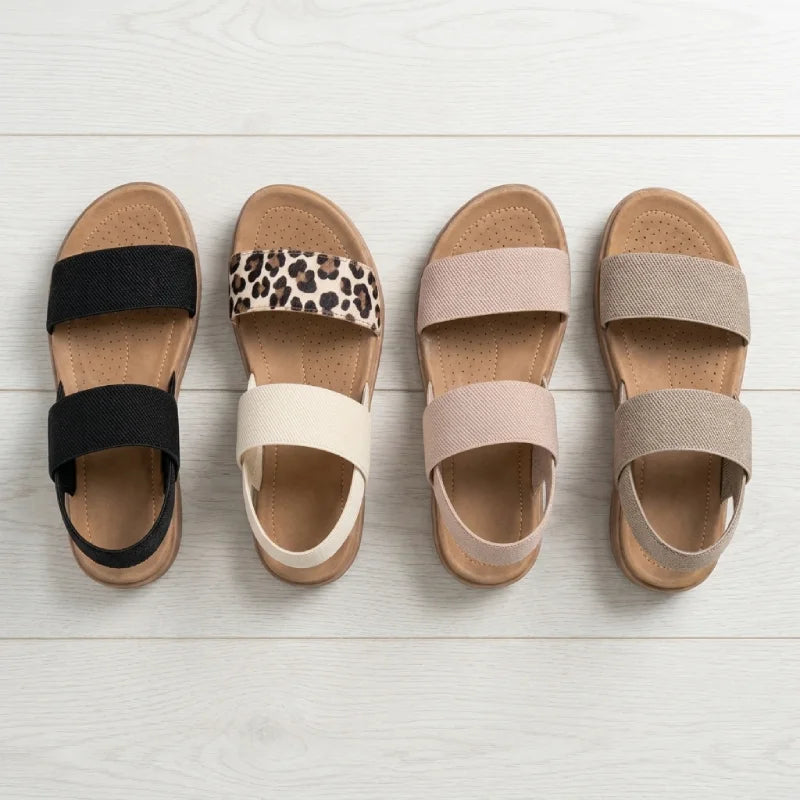
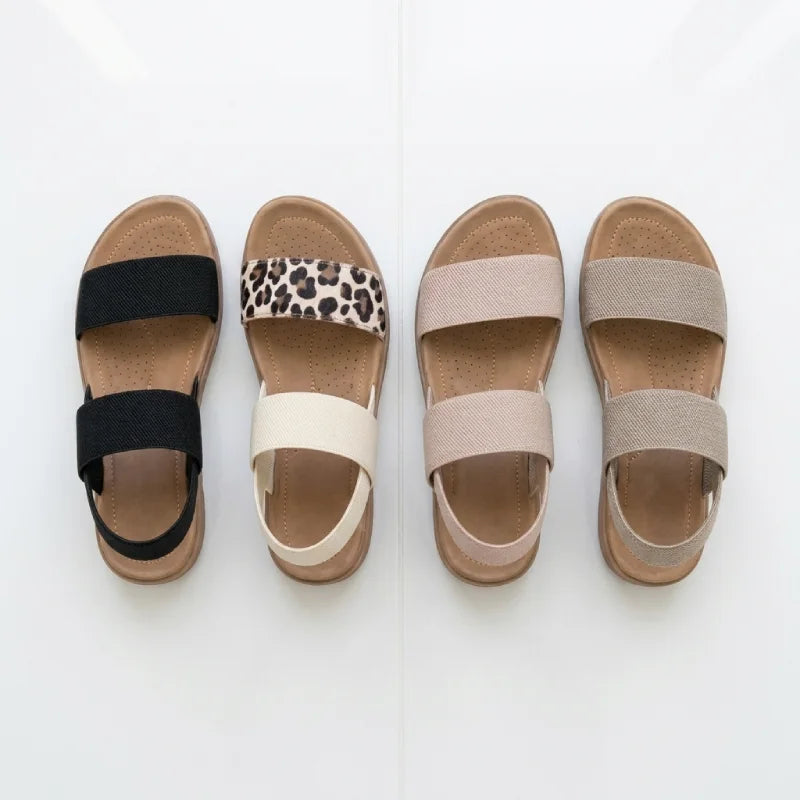
These run true to size, from US 5–11.5 including half sizes, in Beige and Black. If you're between sizes, we recommend sizing up.

What if the fit isn't right for me?

Try it risk-free for 30 days. If the fit isn't right, you can return or exchange it within 30 days of delivery. See our Return Policy for full details.