
CloudStep Classic — Easy Slip-On Shoes with a Wide Toe Box
Find my perfect size
Enter the length of your longest foot and we'll recommend your size.
Tip: measure in the evening, standing, with your heel against a wall.
Size & fit guide
Match your foot length to your size.
| US (Women's) | Foot length (inches) |
|---|---|
| 5 | 8.71 |
| 5.5 | 8.81 |
| 6 | 8.94 |
| 6.5 | 9.09 |
| 7 | 9.25 |
| 7.5 | 9.37 |
| 8 | 9.5 |
| 8.5 | 9.62 |
| 9 | 9.75 |
| 9.5 | 9.87 |
| 10 | 10 |
| 10.5 | 10.12 |
| 11 | 10.25 |
| 11.5 | 10.4 |
Measure both feet standing on paper, heel to longest toe. If one foot is longer, size from that one.


Your old size was one number standing in for length, width, depth and heel. The Current Foot Fit Reset takes those apart again, starting from the feet you have now. Here's how it works.
Recognition
You tried them again, didn't you
You probably tried a pair before you were ready to know. The boots, or the flats you'd had for years. You got one on, felt the pressure across the front, and told yourself it was still swelling. Everything else was going back to normal. These would too.
Then a season passed and you tried again. Same shoe, same feeling.
Somewhere in there you started sorting your shoes without deciding to. There's the pair you can wear. There's the pair you can wear if you're not walking far. And there's everything else, still in the cupboard, still perfectly good, still yours, still not going on your feet.
So you bought a size up. It solved one thing and started another. You lived in sneakers and slip-ons because they were the only things that didn't argue with you. You worked out what the shoes you actually liked had cost, and then stopped working it out.
Nobody warned you about this part.
And after enough of those mornings a quiet thought sets in: that your feet have become the problem. That's the thought worth stopping on. Because there's another explanation, and it isn't about your feet being difficult.
What it actually costs
It's never just one pair
The shoes are the visible part. The rest of it is the deciding. Which pair hurts least today. Whether the walk is short enough for the good ones. Whether it's worth trying the boots again now that it's cold.
Then something comes up. A wedding, a party, a first week back at work. And you're standing in front of a cupboard full of shoes with nothing in it you can wear.
Money already spent, sitting in a cupboard. Money you'd have to spend again, competing with everything else a small child needs.
A wardrobe you're rebuilding one careful purchase at a time, if at all.
The feeling that another piece of who you were has quietly gone.
Almost every one of those attempts was sensible. Going up a size is what anyone would do. It just assumes one number still describes your feet accurately.
What you've probably already tried
- Waiting for them to go back to how they were
- Forcing an old favourite and putting up with it
- Going half a size up, then a full size up
- Trying to stretch old leather
- Buying something cheap as a stopgap
- Living in sneakers, sandals and slip-ons
- Putting a new insole in a shoe that was already the wrong shape
The mechanism
Why one number stopped telling you the truth
A shoe size is a single number standing in for several different things. How long your foot is. How wide it is across the ball. How much room your toes need to spread. How deep the shoe has to be. How firmly the heel is held at the back.
That number never described those separately. It didn't need to. As long as they all lined up the way they always had, one number was good enough shorthand.
Pregnancy can change some of them. In a study that measured 49 women in early pregnancy and again around 19 weeks after birth, most showed a small increase in foot length, usually between 2 and 10 millimetres, and most showed some arch drop.¹ It didn't happen to everyone, and the changes were small. But when one input moves, the number keeps sounding accurate while quietly becoming less accurate. And it won't tell you which input moved.
¹ Segal NA et al. Pregnancy Leads to Lasting Changes in Foot Structure. American Journal of Physical Medicine & Rehabilitation, 2013.
The three-step version
Someone tells you a room is four metres long. You know one thing about that room.
Your sofa won't go in. Not because the room is too short, but because the doorway is too narrow. The length never said anything about the doorway.
So you ask for a longer room. You get more floor. The doorway is exactly as narrow as it was.
What happens when you solve width by adding length. Going up a size doesn't add room in one place. It scales the whole shoe. More length, more depth, and a wider heel opening along with it. Sometimes that gives the toes what they needed. Sometimes it gives you a shoe that's too long and a heel that lifts slightly when you walk. One wrong fit traded for a different wrong fit, and you're no closer to knowing what your feet actually need.
This is not personal failure. You used the one piece of information the system hands you, the same way everyone does. Standard sizing was never built to describe five things at once. It becomes a real problem the moment your feet stop matching the shorthand.
The takeaway: your old size tells you what used to fit you. It doesn't tell you what fits you now. So the answer isn't a bigger number. It's a better description.
The system
Five checks instead of one number
Stop starting from the size you used to wear. Start from both feet as they are today, and ask five separate questions instead of one. Any of them can be the thing that's actually wrong.
Two of them you measure before you order. Three you can only judge with the shoe on.
Measure first
1. Length
Heel to longest toe, on each foot. Your longest toe isn't necessarily your big toe.
2. Forefoot
Width across the ball, at the widest point. Paper on the floor, heel against the wall. Stand rather than sit, because your foot spreads under your own weight. Trace both feet, measure both, write down four numbers and note which foot is bigger. Then use the size chart, and size from the longer foot. Feet don't always change at the same rate, so if yours differ, fit the more demanding one.
Then judge with the shoes on
3. Heel
Does the back of your foot stay put when you walk, or lift with each step.
4. Volume
Does the shoe feel tight or loose through the middle, in depth as well as width.
5. Support
How the arch feels with the footbed in, and then with it out.
That's the whole thing. About five minutes with a pen, and ten minutes on your own floor when the box arrives. It works whatever shoe you end up buying.
CloudStep Classic
One everyday pair, built around the front of the foot
Here's how it's made, so you can hold it against the five checks.
Wide toe box
The front of the shoe is cut wide rather than tapered.
Stretch-knit upper
The upper gives rather than holding one fixed shape.
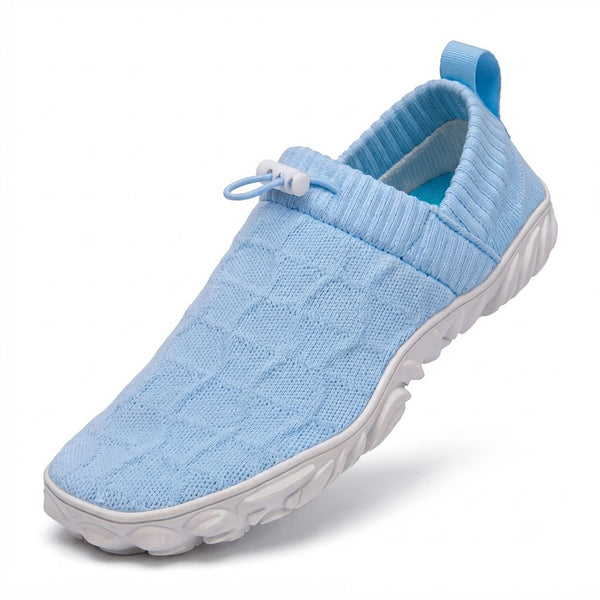
Flexible sole, 0 mm drop
The sole bends through the step, heel level with the forefoot.
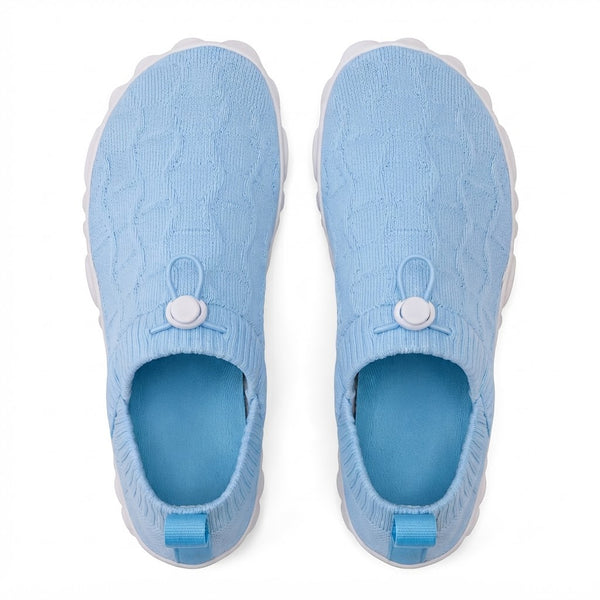
Removable footbed
Lifts out, so you can use your own insole instead.
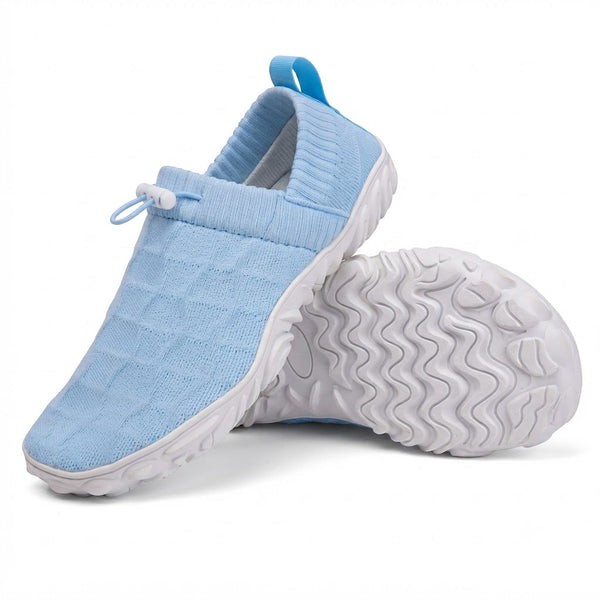
Easy slip-on with an elastic toggle
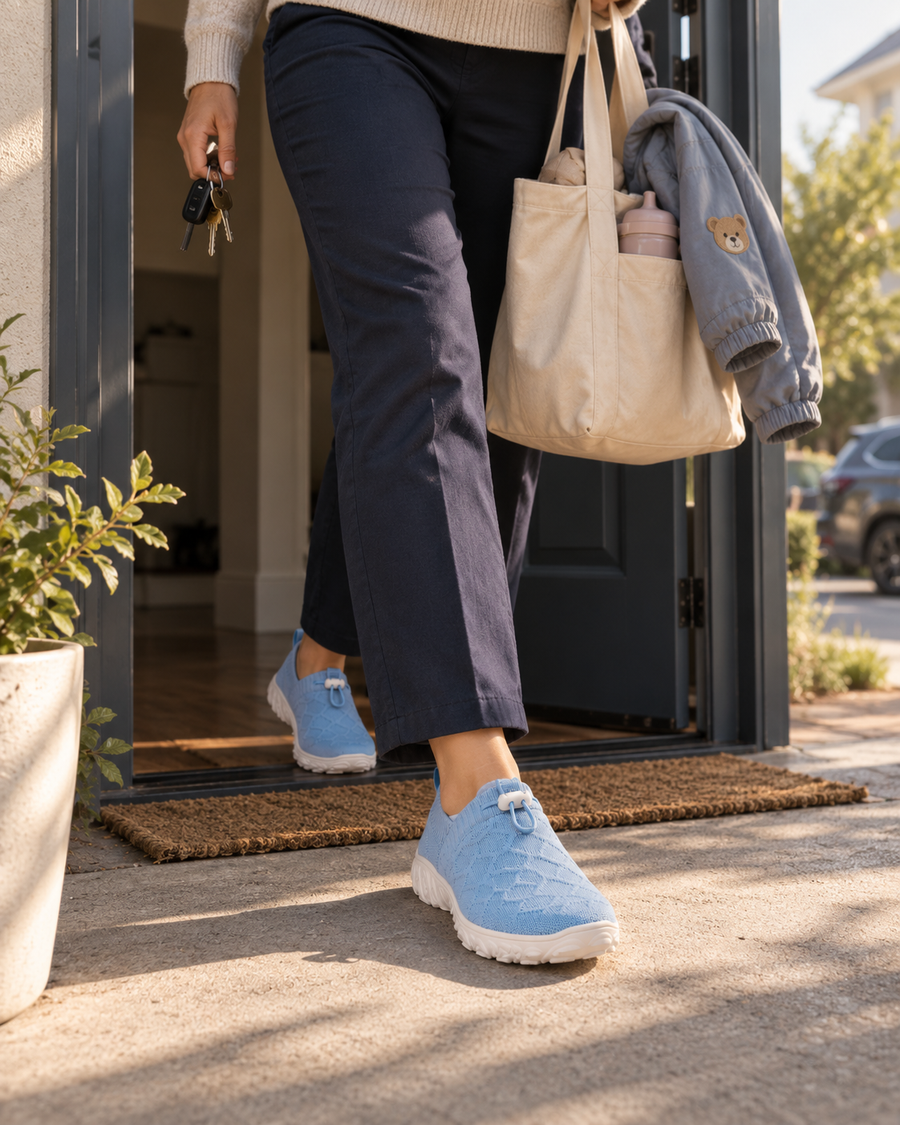
Step in and adjust the elastic closure instead of tying traditional laces, which matters more than it should when you're getting out of the door with a small child.
You versus the old approach
THE OLD APPROACH
- Start from the size you used to wear
- One number covering length, width, heel and depth
- Fix tightness by adding length
- Assume both feet are the same
- Decide at the checkout
THE CURRENT FOOT FIT RESET
- Start from both feet as they are today
- Five checks, done separately
- Find out where the tightness actually is
- Measure each foot, fit the more demanding one
- Decide indoors, with the shoes on
The specifications
| Type | Lightweight casual slip-on |
| Toe box | Wide |
| Upper | Stretch knit, easy slip-on, elastic toggle closure |
| Sole | Flexible |
| Drop | 0 mm |
| Footbed | Removable |
| Weight | 6.5 oz |
Fit is individual. Feet differ in length, width and depth, so try them indoors first and use the five checks before you wear them outside.
Launch price
$79.95 until Sunday · $99.95 from Monday
- One pair of CloudStep Classic
- The removable footbed inside
- The Current Foot Fit Reset, on this page, free to use whether you buy or not
- US delivery in 5–8 business days
- 30 days from delivery to contact us
Returns and exchanges
Contact us within 30 days of delivery. Damaged, defective or incorrect items are replaced free, and transit damage should be reported as soon as the parcel arrives. Size exchanges and change-of-mind returns need to be approved before you send anything back, and the item has to come back unworn and in its original packaging. Return shipping on those is at your own cost, which is why the fit check comes before the order rather than after.
How to decide
Step by step, on your own floor
Before you order
Measure both feet, standing, on paper. Note which one is longer. Use the size chart and size from that foot.
When they arrive
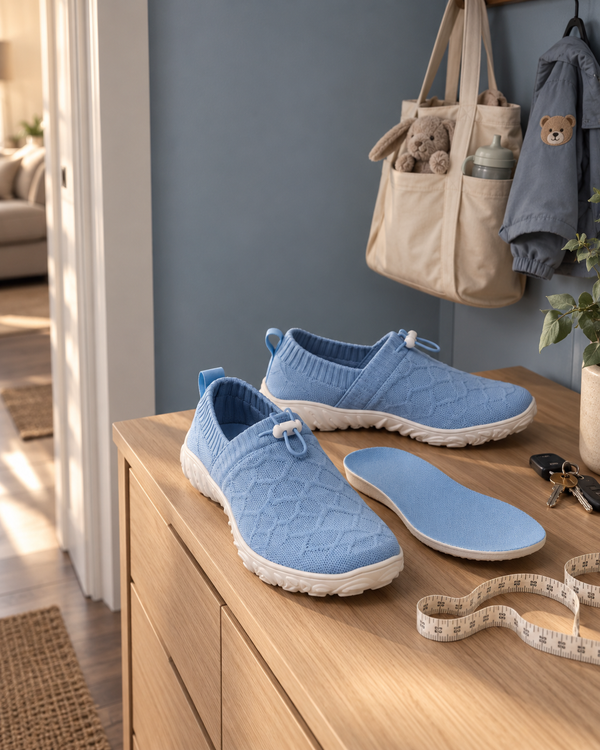
Look at them before you put them on. Check the toe box against your tracing. Lift the footbed out and put it back. Bend the sole.
The indoor try-on
Walk around inside on a clean floor. Does the heel stay down. Does the middle feel tight or loose. How does the arch feel with the footbed in, then out.
Before you go outside
Decide indoors. If any of those is clearly wrong, stop there and get in touch rather than wearing them out and hoping. Once worn outside, an exchange gets harder for both of us.
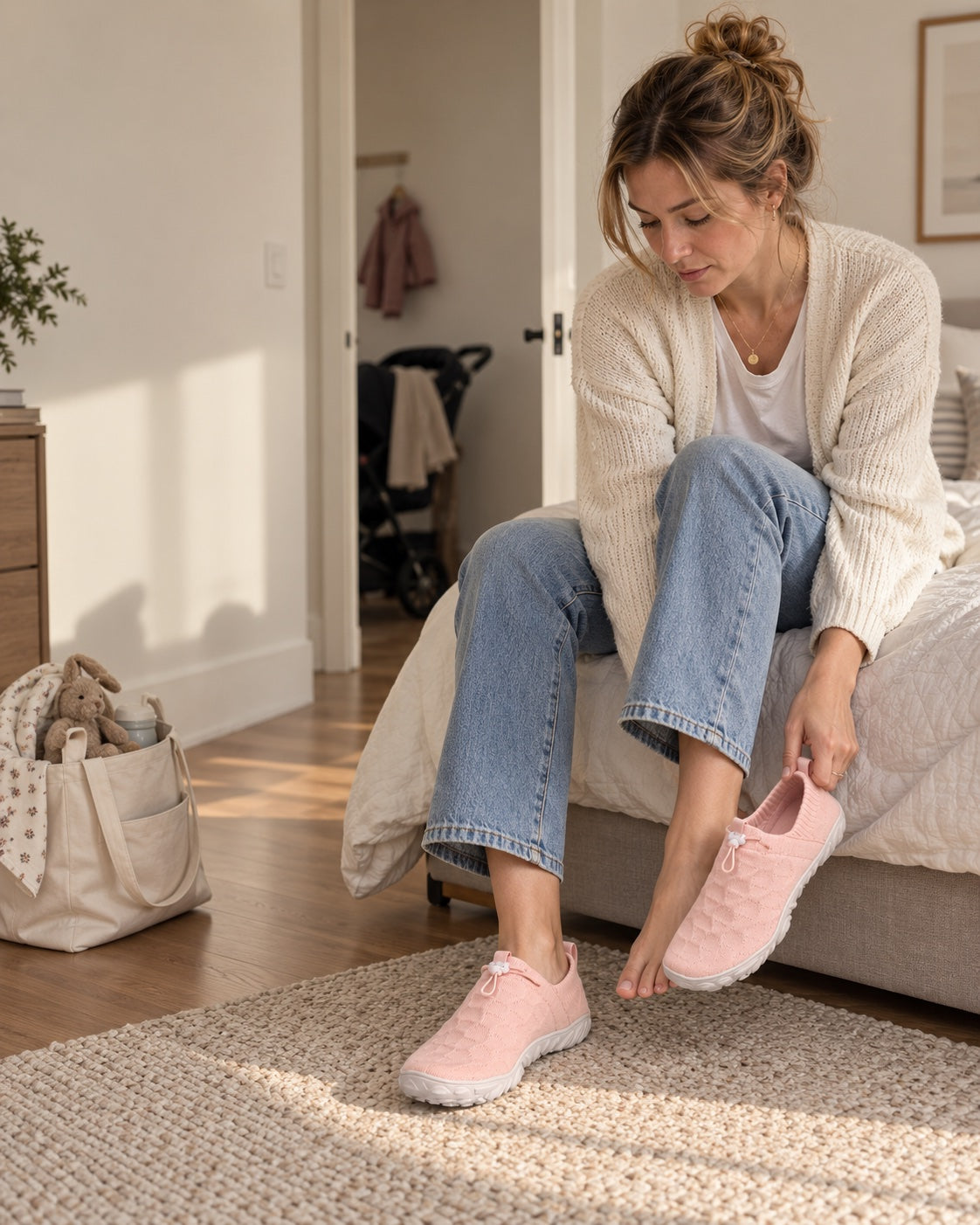
Start with the feet you have
You've already done the hard part, which was accepting that waiting wasn't going to fix it. What's left is a practical question about length, width, heel, volume and support, and you can answer most of it in five minutes with a piece of paper.
CloudStep is one everyday pair with a wide front, a stretch-knit upper and a footbed that comes out. If that matches what your feet need, it's a reasonable place to start rebuilding. Not the whole wardrobe. Just the pair you reach for every morning.
$79.95 until Sunday, September 6 at 5:59 PM ET. $99.95 from Monday. US delivery 5–8 business days. 30 days from delivery to contact us.
The launch price ends Sunday. That's the only thing on this page with a deadline.
Frequently Asked Questions
Why might my old size no longer be enough information?
Because it's one number covering several separate things: length, width across the ball, depth, and how the heel is held. It worked as shorthand while those all lined up. If one changed, the number still sounds right while describing your feet less accurately, and it won't tell you which part moved.
How should I choose a size?
Measure both feet standing on paper, heel to longest toe and across the widest point, then use the size chart. If one foot is longer, size from that one. Do it at the end of the day, when your feet are at their largest.
How wide is the toe box?
The front of the shoe is cut wide rather than tapered. Trace your foot, compare it against the shoe when it arrives, and check that your toes sit side by side rather than pressed together.
Is the sole flexible?
Yes. It bends through the step.
Is the footbed removable?
Yes, it lifts out, which is what lets you use your own insole instead. We haven't tested which orthotics fit, so if you use a custom one, check it indoors before a long walk.
Is CloudStep zero drop?
Yes, 0 mm. The heel sits level with the forefoot. That's a fact about the shoe rather than a recommendation for your feet. If you have ongoing foot pain, that's a conversation for a professional rather than a shoe description.
How much does each shoe weigh?
6.5 oz.
How long does delivery take?
5–8 business days within the US.
What should I check during an indoor try-on?
Room in front of your longest toe. Whether your toes sit side by side. Whether your heel stays down when you walk. Whether the middle feels tight or loose. And how the arch feels with the footbed in, then with it out. Do all of that on a clean indoor floor before wearing them outside.
What if the fit isn't right?
Contact us within 30 days of delivery. Damaged, defective or incorrect items are replaced free. For a size exchange or a change of mind, get it approved first, send the shoes back unworn and in their original packaging, and note that return shipping is at your own cost.